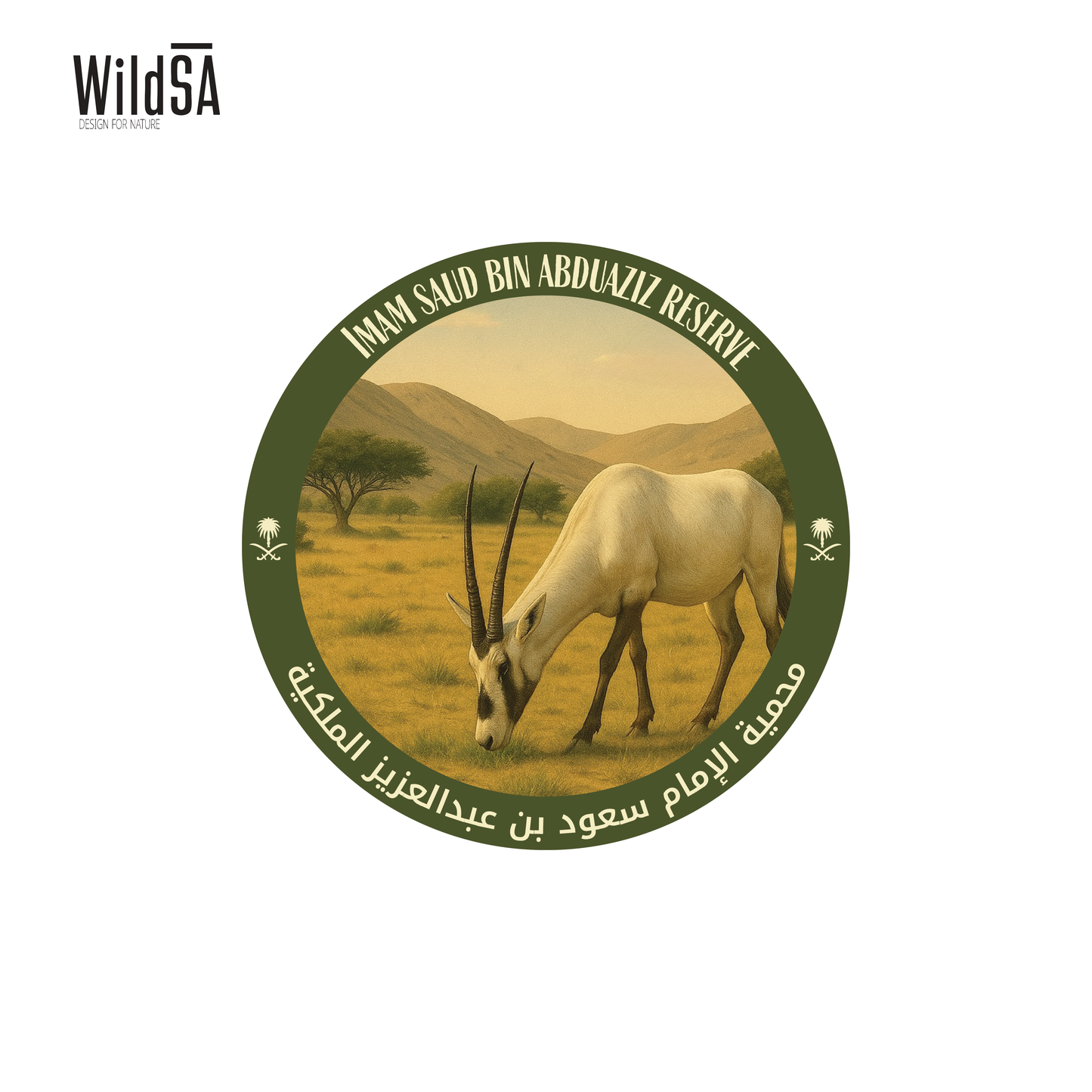
The 10 NCW Reserves Stickers Pack
The 10 NCW Reserves Stickers Pack
Couldn't load pickup availability
Discover Saudi Arabia's Natural Treasures
Bring the beauty of Saudi Arabia's protected wildlife reserves to life with this exclusive collection of 10 premium stickers featuring the National Center for Wildlife (NCW) reserves.
Shada Reserve – Asir Region
Located in the Asir Mountains at elevations between 1,600 and 2,500 meters, Shada Reserve is recognized for its unique juniper forests and diverse plant species. The reserve protects over 300 plant species, many endemic to the Arabian Peninsula. Its terraced mountain slopes and year-round moderate climate create a habitat distinct from Saudi Arabia's desert regions, supporting rare wildlife including the Arabian leopard and Hamadryas baboon.
Majaami' Al-Hadb Reserve – Riyadh Region
Spanning approximately 2,256 square kilometers in central Saudi Arabia, Majaami' Al-Hadb serves as a critical habitat for the Arabian oryx and sand gazelle. The reserve's acacia woodlands and seasonal water channels create an ecosystem that supports both grazing mammals and migratory birds. Its location within the Najd plateau makes it a vital corridor for wildlife movement between northern and southern regions.
Jarf Raydah Reserve – Asir Highlands
Perched at over 2,600 meters elevation, Jarf Raydah is one of Saudi Arabia's smallest but most biodiverse reserves. It protects the last remaining natural habitat of the critically endangered Arabian partridge. The reserve's escarpment creates dramatic elevation changes, resulting in microclimates that support dense vegetation including wild olive trees and juniper forests rarely found elsewhere in the Kingdom.
Farasan Islands Reserve – Red Sea
Comprising over 80 islands in the Red Sea, Farasan Islands Reserve is Saudi Arabia's premier marine protected area. The reserve is internationally recognized for its coral reefs, seagrass beds, and mangrove forests. It serves as a crucial breeding ground for endangered sea turtles and dugongs, while its islands host the endemic Farasan gazelle found nowhere else on Earth.
Marine Sanctuary – Red Sea Coast
This protected marine zone along Saudi Arabia's Red Sea coastline safeguards some of the world's most pristine coral reef ecosystems. The sanctuary's waters maintain exceptional clarity and biodiversity, hosting over 1,200 species of fish and 300 species of coral. Its relatively untouched reefs serve as a living laboratory for marine research and climate resilience studies.
Um Al-Qamari Islands Reserve – Arabian Gulf
Located in the Arabian Gulf, Um Al-Qamari (Mother of Moons) Islands Reserve consists of small islands that serve as vital nesting sites for seabirds and marine turtles. The reserve's shallow waters and tidal flats create rich feeding grounds for migratory shorebirds traveling between Africa and Asia. Its isolation has preserved ecosystems largely unchanged by human activity.
Nafud Al-Urayq Reserve – Northern Desert
Covering 12,750 square kilometers of red sand dunes in northern Saudi Arabia, Nafud Al-Urayq protects classic desert ecosystems. The reserve is home to reintroduced Arabian oryx herds and supports populations of sand cat, Arabian wolf, and Reem gazelle. Its vast dune fields and seasonal vegetation demonstrate the resilience of life in extreme arid environments.
Al-Wa'ul Reserve – Central Region
Al-Wa'ul Reserve encompasses diverse terrain including limestone plateaus, wadis, and acacia woodlands. The reserve plays a crucial role in protecting the Arabian sand gazelle and serves as a breeding site for the endangered Houbara bustard. Its network of seasonal water courses creates temporary oases that support concentrated wildlife activity during rainfall periods.
Uruq Bani Ma'arid Reserve – Empty Quarter
Extending over 12,000 square kilometers into the Rub' al Khali (Empty Quarter), Uruq Bani Ma'arid is one of the largest protected desert areas in the world. The reserve features towering sand dunes reaching 300 meters in height alongside sabkha salt flats and limestone escarpments. It serves as the primary reintroduction site for the Arabian oryx and supports populations of sand gazelle and Arabian red fox.
King Abdulaziz Royal Reserve – Northern Region
As Saudi Arabia's largest protected area, King Abdulaziz Royal Reserve spans over 15,000 square kilometers across diverse ecosystems from volcanic harrat to sand seas. The reserve represents the Kingdom's most ambitious rewilding project, with ongoing reintroduction programs for Arabian oryx, Reem gazelle, ostrich, and other native species. Its scale allows for natural migration patterns and complete ecosystem restoration.
Share